
 Petal
New Models & Capabilities
-
Gemini 4 Argon hits the benchmark circuit — Google shipped Argon this week and it’s doing interesting things: we saw demos of it playing StarCraft at a competitive level and handling robotics control tasks. What’s notable is the practical focus—this isn’t just “model gets bigger number,” it’s “model handles real-world sequential decision-making.” The robotics angle especially matters for operators building automation workflows.
-
Gemini 4 Argon for Robotics — The Google Developers blog dropped a deep dive on Argon’s robotics capabilities, showing how it reasons about physical constraints and multi-step manipulation tasks. For side-hustlers exploring agent workflows, this signals that frontier models are moving beyond chat into embodied reasoning—useful if you’re thinking about autonomous systems or industrial automation angles.
Tools & Workflow Wins
-
Atticus – Hold-to-talk Claude on macOS — A developer built a voice assistant that runs Claude locally via hold-to-talk on Mac. We see this pattern a lot: Claude’s reasoning shines when paired with lightweight input methods. If you’re already using Claude for code or analysis, this is a 5-minute setup that transforms how you iterate—especially useful during research sprints when typing feels slow.
-
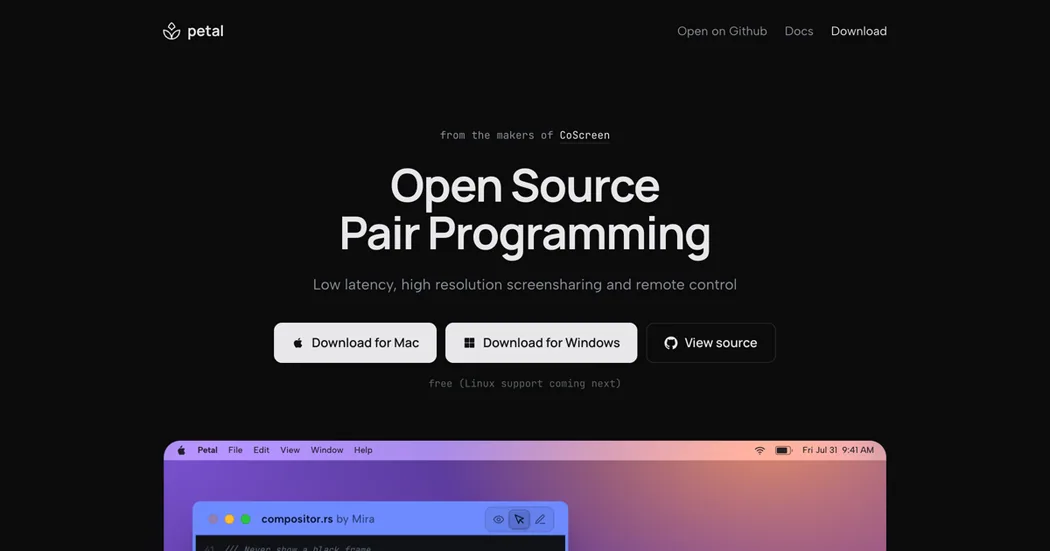
Petal: Open-source CoScreen alternative finally ships — A team released Petal, a free, self-hostable screen-sharing tool that’s been missing from the open-source stack. Not strictly AI, but paired with Cursor or Claude for pair programming sessions, this fills a real gap for distributed solo operators who want to collaborate without vendor lock-in.
-
RDST – Local agent watches your database for query regressions — A Postgres/MySQL monitoring agent that flags performance drops automatically. This is the kind of boring-but-essential tool that saves hours: set it up once, stops worrying about silent performance degradation. Think of it as applying AI reasoning to database ops—a pattern that scales.
Model Comparisons & Engineering
-
How to engineer an AI harness for game development — A practitioner documented building a reusable Claude-powered system for game asset generation and scripting. What’s useful here is the architecture—not just “Claude writes code,” but how to structure prompts, caching, and iteration loops so that Claude becomes a reliable tool in a larger pipeline. Directly applicable if you’re thinking about AI in creative automation.
-
Parsimony: Benchmark for code bloat in AI outputs — Someone built a tool that measures how much unnecessary code different models generate. This matters because token efficiency compounds across projects—if Claude or GPT generates 30% less cruft, your API costs and iteration speed both improve. We’re starting to see this shift from “does it work” to “how efficiently does it work.”
New Ideas & Unconventional Uses
-
Indigene: AI-powered native plant finder — A small app that identifies which native plants thrive in your exact location. It’s a great example of AI solving a real problem for gardeners without needing a 10-person team—solo operator energy, solving for a specific niche. Worth studying as a product angle.
-
Wonderhop: Daily social guessing game — A Wordle-like game built around “guess what most people said” vs. “what nobody said.” It’s a clever use of language models for game mechanics—generating plausible wrong answers that feel right. If you’re exploring game design with AI, this is worth reverse-engineering.
Warnings & Friction
-
Codex CLI installs a persistent daemon by default—security red flag — OpenAI’s Codex CLI was shipping a self-updating background service without explicit opt-in. This is a supply-chain concern for anyone running AI tools in production. Always audit what runs in the background; this is the kind of friction that can cascade into compliance headaches.
-
ChatGPT ads target you based on prompts, phone number, email — A report detailed how OpenAI’s free tier uses your conversation data for ad targeting. If you’re processing sensitive client work or testing confidential workflows, this is a hard reason to stay on paid accounts or use alternatives. Privacy-conscious operators should note this.
The Operator’s Take
We’re seeing AI shift from “impressive benchmark” to “how do I build systems that stay efficient and stay trustworthy”—Parsimony, Petal, and RDST feel more relevant to shipping than Gemini playing StarCraft, even if the latter makes headlines.
Related deep-dives on Operators Lab
Went deeper on the tools behind this week’s stories:
- My AI Automation Stack for 3 Side Businesses: Real Costs, Real Results — I run 3 side businesses on AI automation. Here’s the exact stack, what each tool costs, what it handles, and w…
- Best Password Manager in 2026: I Switched Twice Before Staying — I’ve used 1Password, Bitwarden, and Dashlane over the last four years. Switched twice. The third switch stuck.…
- Claude Code: Honest Cost Breakdown After 30 Days in Production — I’ve used Claude Code as my primary dev assistant for 30 days across 3 side projects. Here’s what it actually …
- Framer vs. Webflow: Which One Ships a Landing Page Faster? — I rebuilt the same landing page in both. One shipped in four days. The other cost me a developer hire and elev…
- Lovable vs. Bolt.new: I Built the Same App in Both — I built the same small SaaS app in Lovable and in Bolt.new — same spec, same afternoon. One got me to a workin…
- NordVPN After One Year in Japan: What I Actually Use It For — I subscribed to NordVPN a year ago. This is not a speed test listicle. This is what I use it for daily in Japa…


