
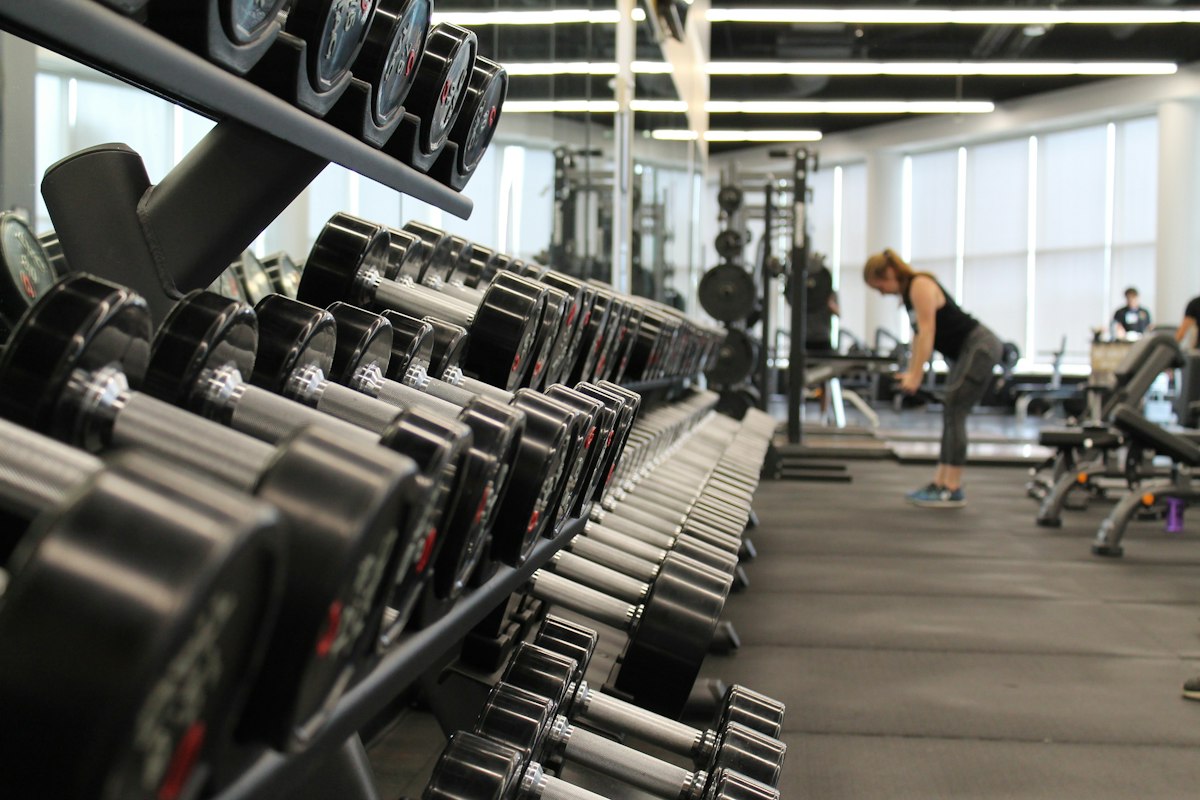
My home gym is six tatami mats — roughly 10 square meters.
I train four days a week: push, pull, legs, and full body. Over the past six months, I’ve gone through three adjustable dumbbell sets, and I have pretty strong opinions about all of them.
Most adjustable dumbbell reviews seem to come from people who did a few curls, tried the selector mechanism, and called it a review.
I’ve put these through hundreds of training sessions.
Here’s what actually mattered.
Why Adjustable Dumbbells Make Sense in a Small Space
The basic math is obvious.
A fixed dumbbell set from 5 kg to 40 kg needs a rack that’s wider than my bathroom door. Two adjustable dumbbells replace all of that and fit under a bench.
But space isn’t the whole story.
What the spec sheets don’t tell you is how fast the selector works when you’re tired, how much the plates rattle, how the dumbbell contacts the floor, or whether the mechanism still feels solid after months of being set down hard.
Those are the things you start caring about around session 100.
The Three Sets I Tested
1. PowerBlock Sport EXP (Stage 1: 5–24 kg)
How I used it: 90 days as my primary set for upper-body training.
The PowerBlock design is polarizing.
You’re basically lifting inside a cage rather than holding a traditional dumbbell, and the weight distribution feels different at first. It took me about two weeks to stop noticing it.
Selector mechanism: You pull and reposition a selector pin. Once you’re used to it, it’s fast. Changing weight takes me roughly four seconds. In 90 days of use, the mechanism hasn’t stuck or misfired once.
Noise: Minimal.
The weights lock in cleanly, with very little rattle during lifts. Even when I set them down firmly, they’re relatively quiet. That’s more important than it sounds when you’re training at home.
Floor contact: The base has a relatively small footprint. I use rubber mats regardless, but I’ve had no issues with the contact point.
What I don’t like: The grip diameter is slightly larger than a standard dumbbell.
I barely notice it on presses or regular curls, but it becomes more obvious on hammer curls and other movements where grip position matters.
Verdict: Still my main set. I’d buy it again.
2. Bowflex SelectTech 552
⚠️ Safety recall notice: Bowflex issued a voluntary recall of the SelectTech 552 (52.5 lb) and 1090 (90 lb) models in June 2025 following reports of weight plates separating from the handle during use. Check the CPSC recall page for the current status before purchasing. The comments below about the dial mechanism and ergonomics still apply to the design, but verify the recall status before buying.
How I used it: 60 days as a secondary testing set.
The SelectTech is probably the most recognizable adjustable dumbbell in this category, and I understand why. The dial system is extremely intuitive.
Turn the dial to your weight, pick up the dumbbell, and go. No pins to pull or plates to screw on.
Selector mechanism: A dial on each end. It’s easily the fastest of the three systems I tested. Changing weight takes about two seconds.
Noise: Noticeably more rattle than the PowerBlock during lifts.
It’s not enough to bother me, but it’s there. Set the dumbbells down hard and you’ll also hear the plates shift with a noticeable clunk.
Floor contact: The long, flat profile gives you more surface area against the floor. That’s useful on less stable flooring, although the dumbbells also take up more space when stored.
What I don’t like: The plastic housing.
After 60 days of regular use, I could already see wear around some of the contact points. The mechanism still worked perfectly, but I wouldn’t be confident betting on five years of heavy daily use.
The shape is another drawback. Any floor exercise that requires holding the dumbbell vertically feels awkward because you’re dealing with a long brick rather than a compact weight.
Verdict: A good option for lighter use, especially if adjustment speed is your priority. It wouldn’t be my first choice for high-frequency daily training.
3. Ironmaster Quick-Lock (5–45 kg)
How I used it: 30 days, mainly for legs and heavier upper-body work.
The Ironmaster takes a completely different approach.
Instead of a selector mechanism, it uses a screw-collar system. You remove the spindle, add or remove plates, then lock everything back down. A weight change takes around 15–20 seconds.
That sounds slow because it is.
But what you get in return is the closest thing to a traditional fixed dumbbell out of the three. There’s no oversized cage, no plastic housing, and virtually no plate rattle. They just feel like normal weights.
Durability: Easily the strongest of the three. Cast iron. Steel collar. Very little to break. I’ve had no concerns setting them down hard, and I wouldn’t be surprised if they outlast me.
What I don’t like: The adjustment time.
Fifteen or twenty seconds doesn’t sound like much until you’re doing drop sets or supersets and trying to move quickly between weights. Rather than fighting it, I ended up adjusting my programming around it.
Verdict: If feel and durability matter more to you than adjustment speed, this is the set I’d choose. It’s particularly well suited to strength-focused training with longer rest periods.
Side-by-Side Comparison
This video covers the core PowerBlock vs. Bowflex trade-off that I keep coming back to — useful context if you’re deciding between the two:
What I’d Actually Buy
| Use Case | Pick | Amazon |
|---|---|---|
| High-volume daily training | PowerBlock Sport EXP | → Amazon |
| Occasional / lighter loads | Bowflex SelectTech 552 | → Amazon |
| Feel and longevity | Ironmaster Quick-Lock | → Amazon |
For high-volume daily training: PowerBlock Sport EXP.
The selector is reliable, the dumbbells are quiet, and the cage design stopped feeling strange after about two weeks.
For occasional use and lighter loads: Bowflex SelectTech 552.
The dial is the easiest adjustment system of the three. If you’re not training four days a week or putting the dumbbells through heavy daily use, the durability tradeoff matters less. Just verify the current recall status before purchasing.
For feel and longevity: Ironmaster Quick-Lock.
Accept the slower weight changes and you get something that feels much closer to a traditional dumbbell.
One Note on Flooring
Whichever set you choose, use rubber mats.
I use a 6 mm rubber mat roll cut to fit the training area. It costs under $30 and protects both the floor and the dumbbells. In a small home gym, I’d consider that part of the setup rather than an optional accessory.
As an Amazon Associate, I earn from qualifying purchases. Prices and availability are accurate at time of writing and subject to change.